Sustainable Playground Safety: Impact Mitigation via Rubber Mulch Play
November 10, 2026
No Comments
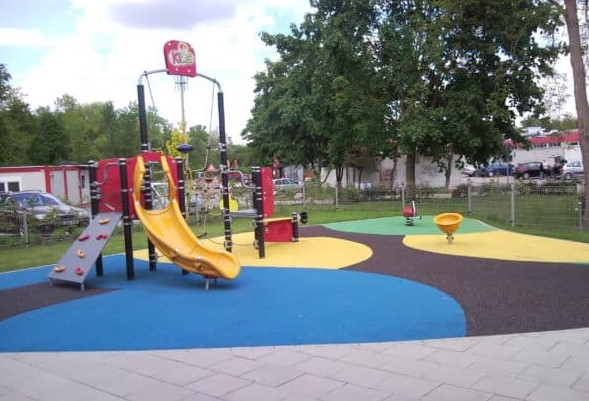 Imagine watching your child swing as high as they can go, lose their grip at the peak, and plunge six feet down toward the ground. In that split second, your heart stops. What lies beneath them determines whether they jump up with a laugh or leave in an ambulance with a fractured bone or concussion.
Over my 10+ years in residential construction and backyard outdoor renovations, I’ve seen parents invest thousands of dollars in high-end cedar playsets, only to surround them with compacted soil, decorative pea gravel, or wood chips that turn into soggy mold pits within a single season. According to national emergency care statistics, over 200,000 children are treated for playground injuries every year, with the vast majority stemming from severe ground impacts.
If you want to create a virtually maintenance-free, weather-resistant landing zone that cushions high falls while repurposing discarded materials, upgrading to a rubber mulch play surface is your ultimate outdoor solution. Let’s explore the science, installation engineering, and long-term value of this game-changing material.
The Physics of Impact Attenuation: How Rubber Outperforms Wood and Soil
Many beginners assume all loose-fill surfacing materials perform roughly the same when a child tumbles off a slide. In reality, traditional wood mulch, sand, and dirt compact into dense, concrete-like surfaces under foot traffic and rain exposure over time.
Think of wood chips like dropping an egg onto a wooden cutting board—there is zero energy absorption, so the impact force transfers directly back into the egg shell (or your child’s joints and skull). Utilizing a rubber mulch play zone, by contrast, acts like dropping that same egg onto a thick mattress. The vulcanized rubber fragments flex elastically under sudden kinetic loads, dispersing impact shock horizontally before it can shock the human frame.
Deciphering Critical Fall Height Ratings
In structural playground engineering, safety is quantified using Critical Fall Height (CFH) testing, regulated by ASTM standards (specifically ASTM F1292):
-
Standard Wood Chips: A 6-inch layer typically provides protection for falls up to roughly 5 to 7 feet before compaction undermines its cushion.
-
Pea Gravel & Sand: Highly unstable, shifting out from under landing zones and providing inconsistent protection that rarely exceeds 4 to 5 feet.
-
Rubber Mulch Play Surfacing: A 6-inch uncompacted layer of shredded recycled rubber achieves a staggering 10 to 12+ foot critical fall height rating, easily outperforming almost every natural organic material on the market.
Technical Superiority: Why Recycled Rubber Dominates Outdoor Spaces
Unlike organic bark or wood shavings, non-biodegradable rubber derived from recycled tire manufacturing offers distinct mechanical and chemical advantages for home landscapes.
| Material Feature | Traditional Wood Bark Mulch | Rubber Mulch Play Surface |
| Lifespan & Durability | Decomposes in 1–2 years; requires annual top-offs | 10–20+ Years: Does not rot, decay, or break down |
| Moisture Absorption | Retains dampness, encouraging mold and fungi | Hydrophobic: Dries rapidly after heavy rain |
| Pest Attraction | Attracts termites, carpenter ants, and rodents | Zero Attraction: Inhospitable to insects and vermin |
| Color Retention | Fades quickly under direct UV exposure | Premium polyurethane coatings resist fading for decades |
Step-by-Step Guide: Installing a Rubber Mulch Play Area Like a Pro
Laying a long-lasting safety zone requires more than simply dumping bags of shredded rubber onto your lawn. Poor ground preparation will cause your mulch to sink into mud or blow away in storms. Here is the exact installation workflow my crew uses on site.
Step 1: Excavate and Clear the Sub-Base
Remove all grass, roots, and rocks from the target footprint, expanding at least 6 feet in all directions beyond the perimeter of the playset. Excavate the area to a uniform depth of 4 to 6 inches, depending on your target equipment’s drop height.
Step 2: Establish Drainage and Soil Separation
Compact the exposed dirt sub-grade with a hand tamper or plate compactor. Next, roll out heavy-duty, woven commercial geotextile landscape fabric across the entire base, overlapping all seams by at least 12 inches.
Pro Tip: Never skip the geotextile fabric! Without this continuous barrier, heavy foot traffic beneath swings will force your expensive rubber mulch down into the mud below, ruining your safety layer within a few months.
Step 3: Install Heavy-Duty Perimeter Containment
Rubber mulch fragments are lightweight and will migrate into your lawn during mowing or play without a rigid border. Install commercial-grade rubber border timbers, heavy plastic landscape edging, or pressure-treated $4 \times 4$ timber walls anchored firmly with steel rebar stakes.
Step 4: Spread and Level the Mulch Evenly
Dump your bulk or bagged rubber mulch play material across the fabric base. Rake it smooth to reach a consistent depth of 4 inches for standard backyard sets (or 6 inches for commercial/high-reach equipment).
Field Warnings and Hidden Pitfalls
Throughout my decade designing backyard safety builds, I have identified several critical traps that homeowners must avoid:
-
The Wire Hazard Lie: Always verify that your supplier sells 99.9% wire-free, tire-derived rubber. Low-grade industrial rubber scraps can contain dangerous trace steel cords from radial belt tires that puncture shoes and skin.
-
Flammability Myths vs. Realities: While high-density recycled rubber can burn if exposed to sustained open flame, it is far more difficult to ignite than dry, sun-baked wood chips or pine needles. Stick to certified playground-grade suppliers that meet ASTM F3012 specifications.
-
The Flotation Flaw: Heavy torrential rains can float loose rubber in uncontained sloped zones. Ensure your sub-grade includes proper slope drainage away from the play area to prevent pooling water.
Long-Term Cost Efficiency: A Smart Home Investment
While purchasing a premium rubber mulch play package carries a higher upfront material cost than cheap wood chips, its long-term return on investment is undeniable.
When you factor in that organic wood mulch requires buying and spreading fresh layers every single spring, rubber mulch typically pays for itself by year three or four. Combine that financial savings with peace of mind regarding child safety, and it quickly becomes one of the smartest outdoor upgrades you can make to your property.
Transforming Your Yard into a Safe Haven
Building an exceptional outdoor space isn’t just about selecting the biggest swing set or tallest slide—it’s about engineering an invisible layer of safety that protects your family every single day. By investing in a high-grade rubber mulch play system, you combine superior impact mitigation, sustainable material recycling, and low-maintenance longevity into one brilliant weekend transformation.
Take control of your backyard safety today, eliminate annual maintenance headaches, and build a play zone where your kids can explore freely and land safely.
What’s Your Playground Setup?
Are you currently using traditional wood chips, turf, or sand beneath your family’s play equipment? Have you encountered issues with weeds, mud, or compacted dirt? Drop a comment or question below! I would love to hear about your outdoor setup and offer tailored advice to help you build a safer yard.