Precision Electrical Finishing: Maintaining Uniformity with the Wall Plate Screw
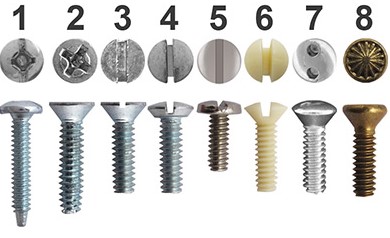 Imagine spending three days meticulously painting your living room in a perfect “Slate Heron” grey. You’ve cut the lines perfectly, the finish is smooth, and the furniture is back in place. But as you sit down, your eyes are immediately drawn to a tiny, crooked line of silver cutting through the aesthetic harmony. It’s a single wall plate screw, overtightened and misaligned, casting a jagged shadow on your pristine wall.
In my decade of traversing construction sites and high-end residential remodels, I’ve learned that a project’s success isn’t just about the big beams or the expensive countertops. It’s about the “last inch.” To an amateur, a screw is just a fastener. To an expert, it is the punctuation mark at the end of a design sentence. If that mark is sloppy, the whole story feels unfinished.
The Psychology of the “Vertical Alignment”
There is a secret handshake among master electricians and high-end finish carpenters: the vertical slot. If I walk into a house and see that every single wall plate screw has its slot perfectly aligned vertically (12 and 6 o’clock), I know I’m looking at the work of a pro.
Why vertical? It’s not just an OCD quirk. Dust settles on horizontal surfaces. By aligning the slots vertically, you minimize the “shelf” where household grime accumulates. More importantly, it creates a visual rhythm. When your brain sees dozens of switches in a hallway, vertical uniformity creates a subconscious sense of order and structural integrity.
The Anatomy of the Wall Plate Screw
While it looks like a standard piece of hardware, the wall plate screw is a specialized component engineered for a very specific task.
1. Thread Pitch and Size
Most standard American wall plates use a 6-32 thread. This means the screw has a major diameter of 0.1380 inches and 32 threads per inch. This fine threading is crucial because it allows for micro-adjustments. When you are trying to get a light switch to sit perfectly flush against a slightly crooked drywall, those 32 threads give you the “resolution” needed to fine-tune the depth.
2. Painted Heads vs. Raw Metal
The head of a quality wall plate screw is usually oval-headed and finished with a hard-baked enamel to match the plate (white, almond, ivory, or black). In my experience, cheap screws use soft paint that chips the moment your screwdriver touches them. High-quality fasteners are designed to withstand the torque of installation without losing their color.
3. Length Matters
Standard screws are typically 1/2 inch to 5/16 inch. However, if you’ve added a thick tile backsplash in your kitchen, your “box” might be recessed. This is where “extra-long” versions become lifesavers, preventing you from stripping the threads of the electrical device while trying to reach the mounting hole.
Analogy: The “Seatbelt” of the Electrical Box
Think of the electrical device (the switch or outlet) as the passenger in a car, and the wall plate screw as the seatbelt. The wall plate itself is just the interior trim.
If the seatbelt is too loose, the passenger rattles around. If the wall plate screw isn’t engaged properly, the outlet will “push back” into the wall every time you try to plug in a vacuum cleaner. This isn’t just annoying; it can eventually lead to mechanical fatigue on the wiring connections behind the plate.
The Hidden Complexity: Avoiding the “Cracked Plate” Syndrome
The most common mistake I see intermediate DIYers make is overtightening. Modern wall plates are often made of thermoset plastic or polycarbonate.
Thermoset is rigid and looks great, but it has zero “give.” If you torque that wall plate screw too hard, the plate will crack with a sickening pop. Polycarbonate (often marketed as “unbreakable”) is more forgiving, but overtightening will still cause it to “bow” or dimple inward, creating a concave look that screams “amateur hour.”
Expert Advice: The “Back-Off” Technique
Tips Pro: When installing a new plate, turn the screw clockwise until it just touches the plate. Then, instead of giving it one last “ugh” of strength, back it off by an eighth of a turn. This relieves the tension on the plastic while keeping the plate snug. Finally, adjust the slot to a perfect vertical position.
The “Hot Screw” Warning
If you ever go to remove a wall plate screw and notice the metal is warm to the touch, or if the paint on the screw head is bubbling/discolored, STOP. This is a classic sign of an electrical arc or a loose wire inside the box that is heating up the mounting strap. The screw is acting as a heat sink. In this scenario, turn off the breaker immediately before proceeding.
Maintaining Uniformity Across the Home
Consistency is what separates a “renovated” house from a “custom” home. When you are replacing hardware, follow these rules for a professional finish:
-
Color Matching: Don’t mix “White” and “Light Almond.” In the hardware store, they look identical under fluorescent lights. At home, under LED 3000K lighting, the difference will be glaring.
-
Driver Selection: Use a #1 or #2 Cabinet Tip screwdriver. These have flat sides that won’t “cam out” (slip out) and scratch the painted head of the screw.
-
Screw Salvage: If you are painting a room, don’t paint over the screws. Remove the plates entirely. Painting over a wall plate screw makes it nearly impossible to remove later without ruining the drywall or the plate itself.
Technical LSI Keywords for the Pro-Learner:
-
Sub-plate mounting
-
Countersunk oval head
-
Enamel finish durability
-
Device alignment
-
Junction box depth
-
Milled slot precision
-
Torque-limiting installation
Conclusion: The Power of the Small Detail
It’s easy to focus on the big-ticket items like flooring or cabinetry, but the humble wall plate screw is the silent guardian of your home’s aesthetic finish. By choosing the right length, respecting the thread pitch, and mastering the “vertical slot” alignment, you elevate your space from “just another room” to a masterclass in precision.
The next time you walk through your home, take a look at your switches. Are they aligned, or are they a chaotic mess of angles? Sometimes, the most satisfying home improvement project costs less than five dollars and takes only ten minutes with a screwdriver.
Do you align your screw slots vertically, horizontally, or have you never even noticed them before? Let’s settle the “Pro-Alignment” debate in the comments—how do you finish your plates?