Data-Driven Resource Management: Implementing the Smart Rain Gauge for Efficiency
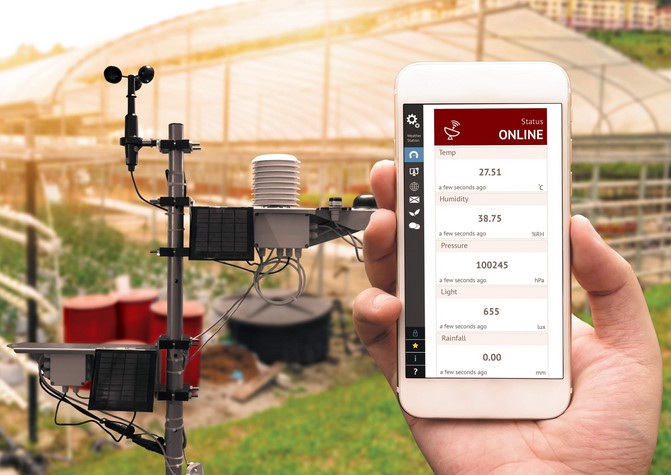
Source:https://b2bblogassets.airtel.in
Picture this: It’s 3:00 AM, and you’re jolted awake by the rhythmic thumping of a heavy rainstorm on your roof. While most people are thinking about sleep, a homeowner without a data-driven lawn strategy is essentially watching dollar bills wash down the storm drain. Why? Because in six hours, their automated sprinkler system will kick on anyway, dumping hundreds of gallons of water onto a yard that is already saturated.
In my ten years of managing exterior refurbishments and sustainable landscapes, I’ve seen homeowners waste up to 50% of their outdoor water usage simply because they were “guessing” the weather. Transitioning to a Smart Rain Gauge isn’t just about being a tech geek; it’s about moving from “hope-based gardening” to precision resource management.
I remember a client in a drought-prone area who saw their water bill drop by $80 a month just by installing one of these units. It was the moment I realized that moisture management is the most overlooked “hidden cost” in home improvement.
1. The Intelligence Gap: Why Traditional Gauges Fail
For decades, the “standard” was a plastic tube stuck in the dirt. You’d have to walk outside, squint at the meniscus, and manually dump it. It was better than nothing, but it didn’t solve the problem of evapotranspiration or real-time scheduling.
A Smart Rain Gauge acts as the “brain” of your home’s exterior. Unlike a static tube, it captures hyper-local precipitation data and beams it directly to your smartphone or smart irrigation controller.
The Analogy: Think of a traditional gauge like a manual thermometer; it tells you it’s cold, but you still have to walk over and turn the heater on. A smart gauge is like a Nest thermostat for your lawn—it sees the “temperature” (rain) and automatically adjusts the “HVAC” (sprinklers) before you even wake up.
2. Precision Engineering: How a Smart Rain Gauge Actually Works
To the untrained eye, it’s just a plastic cup. But inside a high-quality Smart Rain Gauge, there is some fascinating engineering at play. Most professional-grade units use a Tipping Bucket mechanism.
The Tipping Bucket Mechanism
Imagine a tiny see-saw inside the device with two small buckets. As rain falls into the funnel, it fills one bucket. When it reaches a calibrated weight (usually representing 0.01 inches of rain), it tips over, emptying the water and sending an electronic pulse to the sensor.
Self-Emptying Convenience
The biggest “pro” insight I can share is this: Never buy a smart gauge that requires manual emptying. The true “smart” aspect is the maintenance-free nature of the tipping design. It allows for continuous monitoring during massive storm events without you ever stepping foot in the mud.
3. Integrating Data into Your Irrigation Ecosystem
Installing a Smart Rain Gauge in isolation is okay, but the real ROI comes from ecosystem integration. If your gauge isn’t talking to your sprinkler controller (like a Rachio or Rain Bird system), you’re only doing half the job.
-
Hyper-Local vs. National Weather Data: Standard smart controllers often rely on the nearest airport weather station. If that station is 10 miles away, it might be pouring there while your lawn is bone-dry.
-
The “Rain Delay” Logic: By having a gauge on your own roof, your system receives a “skip” command based on the exact milliliter of water your soil received.
-
Soil Moisture Correlation: Advanced users pair these gauges with soil sensors to calculate exactly how much “deep watering” is needed to reach the root zone.
4. Installation Strategy: Avoiding the “Shadow Effect”
In my decade of experience, the number one reason for inaccurate data isn’t a faulty sensor—it’s poor placement. Beginners often tuck the gauge under a tree or near a fence for “protection,” which is a fatal mistake in data-driven management.
The “45-Degree Rule”
To get an accurate reading, your Smart Rain Gauge must be placed in a clear area. I use the 45-degree rule: the distance from the gauge to the nearest obstacle (like a roofline or tree) should be at least twice the height of that obstacle.
Mounting for Stability
-
Avoid the “Wobble”: If you mount the gauge on a fence post that shakes in the wind, the internal see-saw might “tip” falsely, recording “ghost rain.”
-
Leveling is Non-Negotiable: Most smart units have a built-in bubble level. If the unit is tilted even 3 degrees, the bucket won’t tip at the correct weight, throwing your data off by 10-15%.
5. Technical LSI Checklist for Savvy Buyers
When shopping for a Smart Rain Gauge, look for these technical specifications to ensure long-term durability:
-
Ultraviolet (UV) Stabilization: The casing must be UV-rated, or the sun will turn the plastic brittle and yellow within two seasons.
-
Wireless Protocol: Does it use Wi-Fi, Zigbee, or LoRaWAN? For large properties, LoRaWAN is superior because it can transmit through walls and across hundreds of feet.
-
Debris Filters: Look for units with a “bird screen” or mesh to prevent leaves and bird droppings from clogging the funnel.
-
Battery Longevity: Ideally, look for solar-assisted units or those with a 2-year battery life to minimize ladder trips.
6. Expert Advice: The “Hidden Warning” of Frozen Sensors
Tips Pro: If you live in a climate that drops below freezing, you need to be careful. Most Smart Rain Gauges are not designed to measure snow. In fact, if water sits in the tipping mechanism and freezes, it can expand and crack the delicate internal pivots.
Peringatan Tersembunyi (Hidden Warning): Always check if your model requires “winterization.” I recommend bringing the internal sensor indoors during the hardest freeze months or choosing a model with a built-in heater (though these are significantly more expensive and require hardwiring).
7. Analyzing the Data: Becoming a Resource Manager
Once your Smart Rain Gauge has been running for a season, you’ll start to see patterns. You’ll notice that your “Zone 4” stays wet longer because of the shade, or that a “light drizzle” actually provided zero meaningful moisture to the soil.
This data allows you to transition to Cyclical Watering. Instead of watering for 30 minutes once a day, you can use your rain data to water for 10 minutes, three times a day, allowing the water to soak in deeper without runoff. This is how you build a resilient, deep-rooted landscape that survives heatwaves.
Conclusion: Small Device, Massive Impact
Implementing a Smart Rain Gauge is the ultimate “low effort, high reward” home improvement project. It’s a bridge between the physical world of your garden and the digital world of efficiency. By removing the guesswork from your water management, you aren’t just saving money—kamu sedang menjaga sumber daya alam yang berharga.
A home that “knows” the weather is a home that works for you, rather than the other way around.
Are you tired of seeing your sprinklers running during a downpour? What’s the biggest barrier stopping you from automating your outdoor water usage? Let’s troubleshoot your setup in the comments!