Life Safety System Verification: Ensuring Reliability with the Carbon Monoxide Tester
August 25, 2026
No Comments
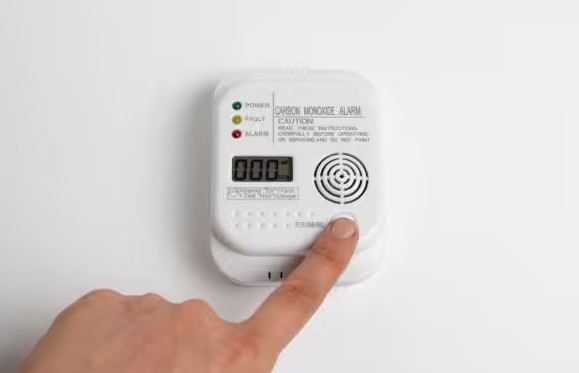
Source:https://blog.qrfs.com
Three winters ago, I received an urgent call from a homeowner in Minneapolis. His family had been experiencing persistent, dull headaches every evening for two weeks. They had brand-new, battery-operated carbon monoxide alarms installed in every hallway, yet not a single alarm had uttered a beep. When I arrived with my professional-grade gear and stepped through the front door, my handheld carbon monoxide tester immediately registered 38 parts per million (ppm) of CO circulating in the ambient air—originating from a cracked heat exchanger in their basement furnace.
That experience underscored a dangerous misconception I see constantly in my ten-plus years in home improvement: people assume a wall-mounted alarm is all they need for total safety. In reality, standard alarms are designed as emergency parachutes to prevent acute death, not as precision diagnostic tools. To truly verify a life safety system and catch slow, chronic leaks before they harm your health, relying on a calibrated carbon monoxide tester is an absolute necessity.
The Silent Killer and the “False Sense of Security” Trap
Carbon monoxide earned its nickname as “the silent killer” for a reason. It is completely invisible, odorless, and tasteless. When fossil fuels like natural gas, propane, oil, or wood burn incompletely, CO molecules form and bond with human hemoglobin over 200 times more readily than oxygen, silently starving your organs.
Most homeowners buy a $30 plug-in detector, stick it on the wall, and consider their home protected. What they don’t realize is that UL-listed residential alarms are engineered with built-in time delays to prevent false alarms.
For instance, a standard residential alarm typically won’t sound at 50 ppm for up to eight hours, and it may ignore low-level exposure under 30 ppm entirely. Yet long-term exposure to just 15 to 30 ppm can cause chronic fatigue, neurological fog, and cardiac strain—especially in children and the elderly.
Think of it this way: a wall-mounted CO alarm is like the airbag in your car—it deploys to save your life during a catastrophic crash. A handheld carbon monoxide tester, on the other hand, is your dashboard diagnostic panel. It tells you the moment a minor engine knock begins, long before the crash ever happens.
How a Specialized Carbon Monoxide Tester Actually Works
To understand why a dedicated carbon monoxide tester is superior for system verification, it helps to look under the hood at the technology powering it.
Most professional handheld testers utilize an advanced electrochemical sensor. Inside the sensor cell, carbon monoxide molecules diffuse through a porous membrane and interact with an aqueous electrolyte bath containing precious metal catalysts (usually platinum). This reaction oxidizes the CO into carbon dioxide ($\text{CO}_2$), releasing electrons and generating a micro-amp electrical current directly proportional to the gas concentration.
CO + H₂O ---> CO₂ + 2H⁺ + 2e⁻
Because this electric current is measured by microprocessors calibrated down to sub-ppm levels, a quality carbon monoxide tester provides instant, real-time numeric readouts rather than a simple pass/fail alarm state.
Key Technical Specs to Look For:
-
Resolution: Must read in 1 ppm increments (0–1,000 ppm range).
-
Response Time ($T_{90}$): Reaches 90% of final reading within 30 seconds or faster.
-
Sampling Type: Direct ambient diffusion or integrated motorized pump with a flexible probe wand.
-
Cross-Sensitivity Compensation: Filters out interference from hydrogen gas ($\text{H}_2$) or common household volatile organic compounds (VOCs).
Step-by-Step: Verification of Your Home’s Life Safety System
Over my years servicing HVAC systems and performing home safety audits, I’ve developed a simple, systematic verification process using a carbon monoxide tester. Here is how to audit your living environment like an expert:
1. Establish an Ambient Baseline
Before turning on any combustion appliances, turn on your carbon monoxide tester outdoors in fresh air. Verify that the unit zeros out at 0 ppm. Walk through your home to take ambient readings in bedrooms, living areas, and the basement to ensure baseline air purity.
2. Perform Appliance Stress Tests
Turn on your fuel-burning appliances one by one—your gas furnace, water heater, boiler, and gas range/oven. Hold your tester’s sampling wand near the draft hoods, vents, and seam joints (keeping a safe distance from open flames to avoid heat damage to the sensor).
Observe the display during the first 60 seconds of appliance ignition. A brief spike under 10 ppm that quickly clears is common during cold starts, but sustained readings above 0 ppm in the surrounding living space indicate a drafting or ventilation failure.
3. Inspect Heat Exchangers and Flue Pipes
For forced-air furnaces, hold the probe near the supply air registers while the blower motor runs. If your carbon monoxide tester registers an increase in ppm when the furnace fan kicks on, you are likely looking at a cracked heat exchanger pulling flue gas directly into your home’s ductwork.
4. Verify Wall-Mounted Alarms with CO Test Gas
Don’t just press the “Test” button on your wall alarm—that button usually only tests the electronic circuitry and battery, not the actual chemical sensor! Use a certified aerosol CO detector test gas spray around the detector housing while monitoring response time to verify that the sensor itself remains active.
Field Notes: Pro Tips & Hidden Warnings from 10+ Years in the Trade
Throughout my decade working in residential trade services, I’ve seen countless dangerous situations caused by minor misunderstandings of gas dynamics. Here are critical insights you won’t usually find in standard instruction manuals:
PRO TIP: The “Heat Expansion” IllusionA cold heat exchanger in a furnace may show zero CO leakage during a quick 2-minute visual check. However, as metal heats up and expands over a 15-minute heating cycle, hairline cracks open up. Always run your combustion appliances for at least 10 to 15 minutes while continuously monitoring with your carbon monoxide tester to catch thermal expansion leaks.
HIDDEN WARNING: Watch Out for “Sensor Drift”Electrochemical sensors inside any carbon monoxide tester naturally degrade over time due to electrolyte drying and catalyst degradation. Never trust a tester that hasn’t undergone zero-calibration or bump testing within the manufacturer’s specified window (typically every 6 to 12 months). An uncalibrated tester gives a false sense of security that can be just as dangerous as having no tester at all.
Choosing the Right Carbon Monoxide Tester
Depending on your skill level and how deep you plan to dive into home diagnostics, choosing the right tool is essential:
| Feature | Pocket Ambient Monitor | Handheld Sniffer / Wand | Full Combustion Analyzer |
| Primary Use | Personal air quality / Travel | DIY diagnostics & leak tracing | Professional HVAC tuning |
| Sampling Mechanism | Passive Diffusion | Motorized Pump / Probe | High-Temp Pump & Moisture Trap |
| PPM Range | 0 – 500 ppm | 0 – 1,000 ppm | 0 – 4,000+ ppm |
| Target User | Beginner / Homeowner | Advanced DIY / Inspector | Master Technician |
Taking Control of Your Home’s Safety
Verifying your home’s life safety system isn’t about panicking—it’s about taking proactive, empirical control over the air your family breathes every single day. A wall-mounted alarm is your final safety net, but a quality carbon monoxide tester is the proactive instrument that ensures your fuel-burning appliances, chimneys, and ventilation systems operate cleanly and reliably year after year.
Have you ever tested your home’s combustion appliances beyond just pushing the test button on your wall alarm? What air safety checks or tools do you currently rely on in your home maintenance routine? Drop your thoughts, questions, or experiences in the comments below—I’d love to jump in and answer them!