Strategic Flooring Procurement: Navigating ROI with Carpet Padding Types
September 20, 2026
No Comments
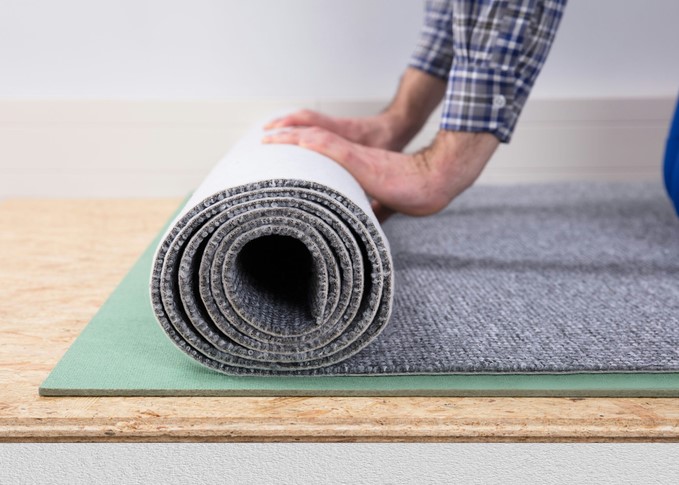
Source:https://gcflooringpros.com
I still remember a call I got six years ago from a client named Mark. He had just spent over $8,000 on top-tier plush carpet for his living room, only to complain eight months later that it felt like he was walking on bare concrete. When I dropped by to inspect the job, the problem was immediately obvious: to save a quick $200 during installation, he had opted for cheap, low-density cushion.
His expensive carpet was literally grinding itself to death from the bottom up.
In my ten-plus years in home improvement and renovation, I’ve seen this exact scenario play out dozens of times. Homeowners focus 95% of their attention and budget on the carpet fibers they can see, completely ignoring the invisible hero underneath. The truth is, your choice among various carpet padding types dictates up to 70% of your flooring’s lifespan, thermal efficiency, and overall return on investment (ROI).
The Shock Absorber Analogy: Why Underlayment Drives Carpet Lifespan
To understand why underlayment matters so much, think of your carpet as a high-performance sports car and the padding as its suspension system. If you put racing tires on a car with broken shocks, every bump in the road hits the frame directly, causing rapid structural wear and tear.
When you step on a carpet, your foot exerts downward localized pressure. A high-quality pad absorbs that kinetic energy by compressing and rebounding smoothly. Without adequate support underneath, the backing of your carpet takes the full force of every step, causing fiber matting, crushed tufts, and early seam separation.
Field Insight: Over my decade on job sites, I’ve observed that upgrading from a baseline builder-grade pad to a high-density cushion typically doubles the usable lifespan of mid-range carpeting—saving homeowners thousands in premature replacement costs.
Deconstructing Carpet Padding Types: Material Specifications & Performance
Not all underlayment materials are engineered for the same environment. To make a smart procurement decision, you need to know how the primary carpet padding types perform under real-world conditions.
1. Rebond Padding (Bonded Polyurethane)
Rebond is the industry standard for residential spaces, made from recycled foam scraps bound together with polyurethane elastomers.
-
Best For: Living rooms, bedrooms, and general residential traffic.
-
Pros: Highly cost-effective, environmentally friendly, and widely available.
-
Cons: Can vary in quality depending on the manufacturing batch; lower-tier density options degrade quickly under heavy pivot traffic.
2. Prime Polyurethane Foam
Unlike rebond, prime foam is manufactured as a continuous block of virgin foam, similar to a firm mattress core.
-
Best For: Low-to-moderate traffic areas like guest bedrooms.
-
Pros: Delivers a very soft, luxurious feel underfoot.
-
Cons: Less resilient over time compared to rebond; susceptible to crushing under heavy, localized weight.
3. Memory Foam (Viscoelastic)
Formulated to contour to pressure, memory foam padding offers an ultra-plush walking experience.
-
Best For: Master suites and low-traffic luxury spaces.
-
Pros: Unmatched comfort underfoot and excellent sound damping.
-
Cons: Can feel “mushy” under heavy foot traffic and is prone to permanent indentation under heavy furniture legs.
4. Synthetic Fiber & Felt Padding
Engineered by needle-punching synthetic or natural fibers into a dense mat, this non-foam option prioritizes structural rigidity over pillow-soft comfort.
-
Best For: Commercial setups, high-traffic stairs, and low-pile berber carpets.
-
Pros: Extremely durable, resists crushing, and prevents carpet stretch-out.
-
Cons: Provides a firmer, less forgiving feel underfoot.
5. Rubber Padding (Flat & Waffle)
Heavy-duty flat rubber pads represent the pinnacle of durability and moisture resistance.
-
Best For: High-moisture areas like basements and high-traffic commercial hallways.
-
Pros: Exceptional longevity, superior acoustic isolation, and natural mold resistance.
-
Cons: Premium price point and heavy material weight during installation.
Comparative Matrix: Selecting by Specifications
When matching cushion options to your home’s layout, balance density, thickness, and performance metrics carefully:
| Padding Type | Density (lbs/cu. ft.) | Ideal Thickness | Moisture Resistance | Traffic Rating |
| Rebond Foam | 6.0 – 8.0+ | 3/8″ to 7/16″ | Moderate (Vapor Barrier Optional) | High |
| Prime Foam | 2.5 – 5.0 | 3/8″ to 1/2″ | Low | Moderate |
| Memory Foam | 3.0 – 5.0 | 3/8″ to 7/16″ | Moderate | Moderate |
| Synthetic Felt | 10.0 – 12.0+ | 1/4″ to 3/8″ | High | Extreme |
| Flat Rubber | 18.0 – 22.0+ | 1/4″ to 3/8″ | Excellent | Extreme |
Navigating Density vs. Thickness: The Technical Sweet Spot
The most common mistake I see homeowners make is assuming that thicker padding automatically equals better quality. A 1/2-inch thick, low-density foam pad feels soft initially, but it allows too much vertical flex. This excess movement stretches out the carpet backing over time, creating unsightly ripples across your room.
For residential installations, aim for a density rating of 6 to 8 pounds per cubic foot paired with a maximum thickness of 7/16 inches. If you are installing loop or Berber carpets, keep the thickness under 3/8 inches to prevent the loops from tearing away from the backing when stepped on.
Pro Tips & Hidden Traps: Insights from the Field
Pro Tip: The Spill-Block Vapor Barrier Upgrade
If you have pets, kids, or are installing flooring in a basement, always select a pad with an integrated moisture barrier layer on the top face. Standard foam acts like a sponge, absorbing liquid spills deep into the subfloor where bacteria and mold thrive. A factory-laminated film keeps liquids on top of the cushion so your carpet extractor can clean them up completely.
Hidden Warning: The Warranty Pitfall
Peringatan: Installing a pad that exceeds 7/16-inch in thickness or falls below the manufacturer’s density specification can instantly void your carpet’s wear warranty. Carpet manufacturers strictly mandate underlayment specs because incorrect cushion selection causes 80% of premature fiber breakdown claims. Always check the fine print of your carpet warranty before buying your pad.
Maximizing Your Flooring Investment
Upgrading your underlayment isn’t just an added expense—it’s a high-ROI strategy that protects your primary renovation investment. Choosing the right density, thickness, and material composition transforms even budget-friendly carpet fibers into a durable, comfortable surface that stands up to daily wear for years to come.
What’s Your Flooring Strategy?
Are you planning a carpet overhaul soon, or dealing with worn-out flooring in your current setup? Which underlayment properties matter most to your space—plush comfort or heavy-duty durability? Share your thoughts, projects, or questions in the comments below—I’d love to help you optimize your layout!